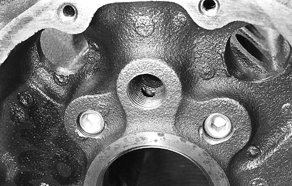
Improved SBC Timing Chain Oiling

In the plug in the passenger side passage, drill out the plug 0.030" (1/32") to spray on the chain. You can also drill the other two plugs to release trapped air, but it's not necessary.

You can tap the plug holes with  a 1/4' pipe tap and use pipe plug, but use a shallow plug for the center hole so as to not to block the oil galley behind it.


Oil pump pickup should be held 3/8' to /1/2" off the bottom of the pan. When located correctly, weld the pickup in place.

REFERENCE

Block Plug Basics, Super Chevy

"Most small-blocks feature four 3/8-inch threaded holes (two per side) at the front of the block. The upper hole adjacent to the fuel pump passes into the crankcase area and if left open will allow oil to leak out from the block. Be certain to plug this hole only with a short 3/8-inch bolt (1/2-inch long). Because this hole aligns perfectly with the fuel pump’s pushrod, a longer bolt will contact and seize the pushrod during engine operation."

Grump's Performance Oil System Mods.

Comments

Popular posts from this blog

HOW TO MAKE SPRINGS by Dave Silberstein

Until a few years ago, Dave Silberstein maintained a great site at EarthLink that delved into the mysteries of making springs. It was very extensive. If you needed to make a spring, his site helped you do it. He even went so far as to publish the site contents in book form at Lulu.com. Sadly, both the site and the book are no longer available because Mr. Silberstein passed away in 2012 in a car accident. Such a valuable resource should not be lost. Fortunately, the Internet  has kept an archived copy. Here's the site map so you can get an idea of what's available and also so the search engines will pick it up. HOW TO MAKE SPRINGS Introduction Disclaimer, preface, description of the main types of springs Design General principles, mathematics, design limitations, buying design Materials Types of wire and their attributes, buying wire Saf...

WTF is a Franzinator?

Sometimes the most useful things have the oddest names. Take the Franzinator, for instance. Named after Franz©, its curmudgeonly inventor, the Franzinator is a device used to separate moisture from compressed air. Having moisture in compressed air is not a a good thing, especially in painting where it contaminates the painted surface, or in media blasting where it causes the media to clump and not work as well. As well as causing rust in the air tanks and air tools, moisture is best removed. A number of methods have been developed from expensive refrigerated driers used to pre-condition air before it gets to the compressor, to simple mechanical separators that sit in the air line between the tanks and the air tool. Here is a tank that uses a chemical desiccant to dry the air. There are also ways to install the air lines that are intended to either cause moisture to condense or collect before it is sent to the air tool. A non-mechanical separator causes the moisture in the hotte...

Atlas No. 64 Drill Press Clockspring

The clockspring for my Atlas No.64 drill press (the spring in the quill) is broken and I need a replacement. So far, I've been unsuccessful in locating one the correct size and would appreciate a lead on one that will fit.